Inclusive Attendance
As a school we are working in close collaboration with

A Recognition-Based Approach to Attendance
At our school, we believe in celebrating both individual and whole-school achievements. By recognising the efforts of our children, families, and staff, we aim to create a positive and supportive environment where everyone feels valued. This approach helps us build strong relationships, promote inclusivity, and encourage children to develop a genuine love of learning.
Why Good Attendance Matters
Coming to school every day is an important part of each child’s learning journey. Regular attendance supports academic progress, personal development, and wellbeing. It also helps children to make the most of all the opportunities school life offers.
- Relationships and Community: School is a place where children make friends, grow in confidence, and learn how to work and play together. Good attendance helps children stay connected with their classmates and feel part of our school family.
- Positive Adult Support: When children attend regularly, teachers can get to know them well, offer individual guidance, and celebrate their progress.
- Wellbeing: Being in school contributes to children’s emotional, social, and spiritual wellbeing. A sense of belonging and routine helps them flourish.
- Engagement in School Life: Children who attend consistently are more likely to join clubs, sports, and other activities that enrich their learning and broaden their experiences.
- Learning and Achievement: Regular attendance means children can follow the curriculum, deepen their understanding, and achieve their full potential.
- Building Secure (Sticky) Knowledge: Every day in school offers important learning. Missing lessons can make it harder for children to build on what they already know.
- Avoiding Gaps in Learning: Frequent absences may create gaps that are difficult to close. Steady attendance helps children feel confident and prepared for each new step in their learning.
- Healthy Routines: Coming to school each day helps children develop good habits such as punctuality, responsibility, and organisation—skills that will support them throughout life.
- A Shared Responsibility: Parents and carers play a vital role in supporting good attendance. Ensuring children come to school regularly is part of their legal responsibility and helps us work together for each child’s success.
St Mary & St Paul’s Attendance Overview
Attendance is a key priority for the school and is included on the school development plan.
Gates open at 8.45am – this is when learning starts – including reading, challenges based on previous learning, spelling, maths challenges.
The register is taken at 9.00am (after this any child is classed as late)
Register closes at 9:30am – after this the child will be mark in school (U code) but will not get an attendance mark for the morning session.
Our aim is for all children to achieve 100% attendance.
Daily
Early morning calls to support families to get ready for school.
Once the registers have been taken, there is a first day response with families being contacted if they haven’t already spoken to school that morning.
If children are absent, home visits can be arranged. If no contact is made – the appropriate agencies can be contacted.
If a child hasn’t been seen for 4 days (and no contact made from parents) then a home visit will be made.
If parents are not able to bring a child to school, the school minibus can be used to collect them if there are staff available to accommodate this.
Monthly traffic light visual notification linked to the number of days of absence.
Rewards
Weekly class attendance rewards – sticker chart for each class – 100 stickers means a class prize
Certificates for children who have 100% and over 98.5%
Vouchers / treats for children who have achieved 100% at the end of the year
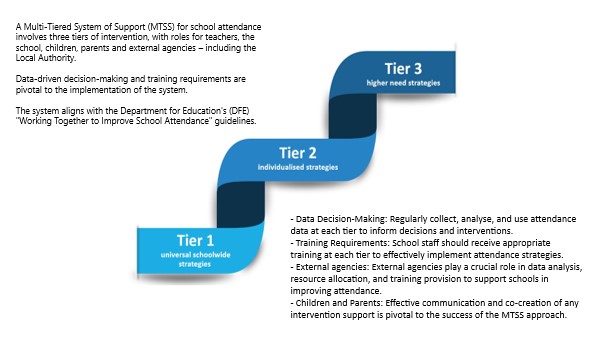
There are 3 Tiers of support for families:
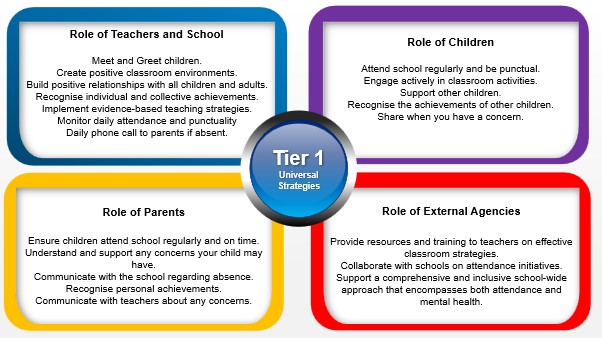
Tier 1 – Universal strategies
The procedures will be as follows:
Step 1 – Phone calls to parents (first day response)
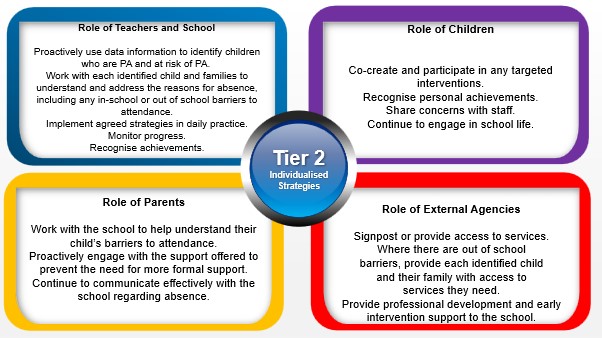
Tier 2 – Individualised strategies
Step 2 – Stage 1 letter of of Early Help support
Step 3 – Initial meeting (this may take place at the gate but needs to be a face to face conversation)
Step 4 – Home visit (if the child is not attending at all – 2 members of staff will call)
Step 5 – Notice to Improve Letter
Tier 3 – Higher Needs Strategies
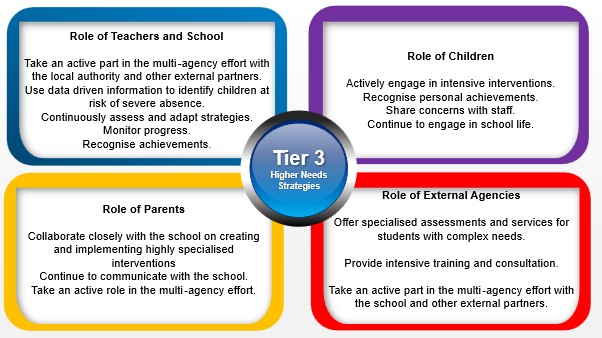
Step 6 – If attendance hasn’t improved over the period of 6 weeks, then refer to School Attendance Service (Tier 3)
School Attendance Service (SAS)
Step 1 – If a caseload family (all siblings will be included no matter which school they attend). SAS to set up an Attendance Improvement Meeting (AIM) with action plan for family to follow. If this improves over 3 weeks they can come off the list and another family referred. If not, continue to support for 3 weeks.
Family First
Step 1 – If attendance hasn’t improved over 6 weeks at Level 2 the family are to be referred to Family First for additional support
Social Care (Educational Neglect)
Social workers will become involved
Educational Penalty Notice (EPN)
Sitting alongside this system is the EPN – This will be issues for a series of unauthorised absences.
6 sessions unauthorised – initial letter
10 sessions unauthorised – EPN notice issued by the Local Authority.
Please note that the data for the EPN is taken from our attendance registers and the fines are issued and collected by the Local Authority. The money does not come to school.
School Attendance Service
They are used for a range of options
- Caseload work with 1 or 2 families per half term
- Visits to homes
- Meetings with parents in school
- Class meeting to talk to children